
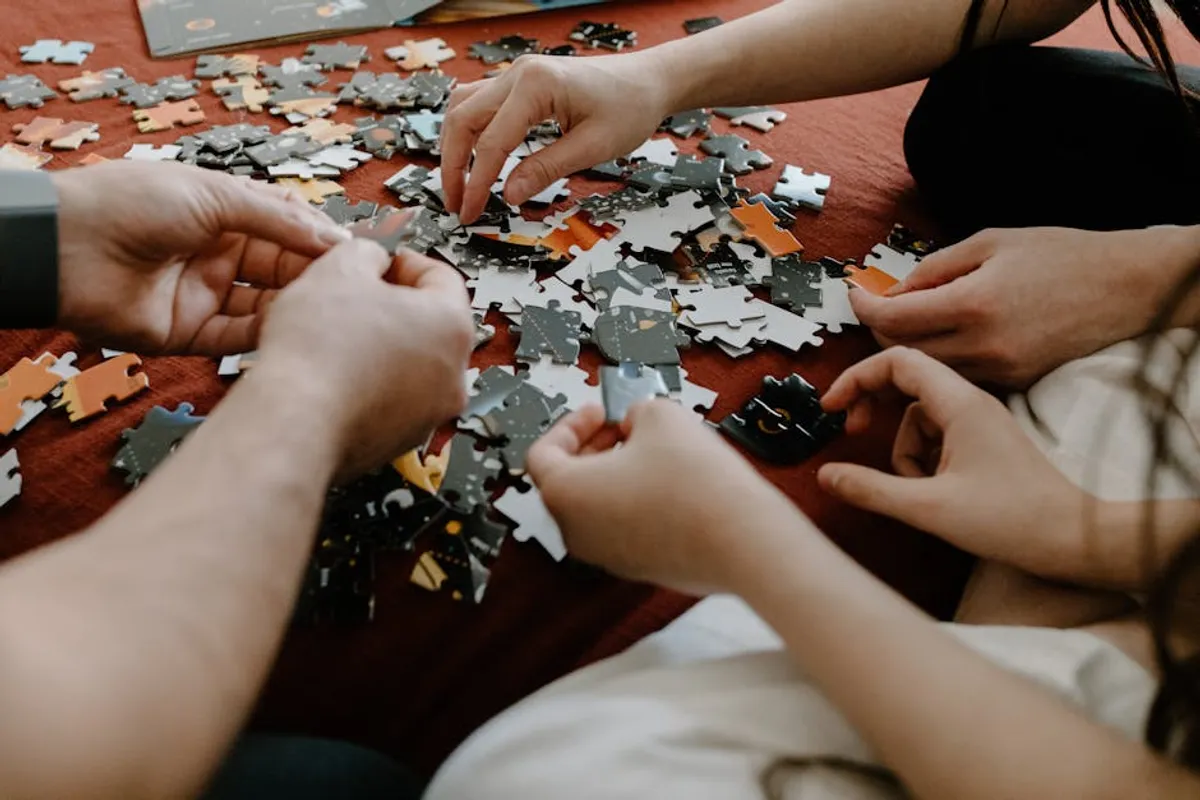
Selecting the ideal family puzzle game for game night requires balancing several factors: engaging mechanics, appropriate complexity for varied age groups, and sufficient replayability to justify its place in your collection. A well-chosen puzzle game can foster critical thinking, strategic planning, and collaborative problem-solving, transforming a simple evening into a memorable shared experience. This guide evaluates top contenders, focusing on their core gameplay loops, player interaction, and overall suitability for diverse family settings, helping you pinpoint the next addition to your entertainment roster.
Choosing the Right Family Puzzle Game for Game Night
Before committing to a new game, consider these aspects to ensure it aligns with your family's preferences and dynamic:
- Player Count & Age Range: Verify the game's minimum and maximum player counts match your typical game night group. Check the recommended age range to ensure complexity is appropriate for all participants, preventing frustration for younger players or boredom for older ones.
- Complexity & Learning Curve: Some puzzle games offer immediate accessibility, while others require a dedicated session to grasp the rules. Assess your family's willingness to learn complex systems. A game with a steep learning curve might be rewarding long-term but could deter casual players initially.
- Game Type & Mechanics: Puzzle games encompass various mechanics, from spatial reasoning and pattern matching to deduction and resource management. Decide if your family prefers cooperative challenges, direct competition, or a blend. Consider if abstract themes or narrative-driven experiences are more appealing.
- Replayability: A game's longevity is crucial. Look for variable setups, multiple strategies, or expansions that introduce new content. High replayability ensures the game remains fresh and engaging across many game nights, offering new challenges each time.
- Interaction Level: Some games involve constant player interaction, such as negotiation or direct competition for resources, while others are more solitary, focusing on individual optimization. Determine the level of direct engagement your family enjoys, as this impacts the overall social dynamic of game night.
1. Codenames
Codenames is a word-association puzzle game where two teams compete to identify their agents from a grid of 25 unique words. Spymasters give one-word clues that can point to multiple words on the board, while their teammates attempt to decipher the clues without selecting the opposing team's agents or the assassin. Its core mechanic is about precise communication and lateral thinking, making it a test of vocabulary and deduction.
Best For: Families with strong verbal communication skills and a love for word puzzles, especially with larger groups (4-8 players).
Pros: High replayability due to varied word grids; encourages creative thinking and precise language; scales well with player count; quick to learn.
Cons: Can be challenging for younger children or those with limited vocabulary; clue-giver can experience analysis paralysis; some groups may find the assassin rule too punishing.
Verdict: A highly engaging and mentally stimulating game that thrives on clever wordplay and team dynamics. It rewards succinct communication and makes for memorable, often hilarious, game night moments.
2. Ticket to Ride
Ticket to Ride is a railway-themed board game where players collect colored train car cards to claim railway routes connecting cities across a map. Completing destination tickets, which require connecting specific cities, earns bonus points, while unclaimed routes or incomplete tickets incur penalties. The puzzle lies in optimizing route claims, blocking opponents, and managing card resources to maximize points efficiently.
Best For: Families seeking a strategic yet accessible game with a clear objective and moderate player interaction, suitable for mixed age groups.
Pros: Simple ruleset makes it easy to teach; engaging map-building mechanic; multiple paths to victory; various map expansions offer fresh challenges.
Cons: Can become repetitive without expansions; direct conflict is minimal, which some players might find less engaging; luck of the draw can impact strategy.
Verdict: An excellent entry point into strategic board gaming, offering a satisfying blend of tactical route planning and resource management. Its straightforward goals ensure it remains a family favorite for years.
3. Pandemic
Pandemic is a cooperative game where players work together as disease-fighting specialists to prevent global outbreaks and discover cures for four deadly diseases. Players move around the world map, treating infected populations, building research stations, and sharing knowledge to find cures before the diseases overwhelm humanity. The puzzle involves optimizing actions, managing outbreaks, and coordinating efforts under constant threat.
Best For: Families who enjoy working collaboratively towards a common goal and appreciate a high-stakes, thematic challenge.
Pros: Fosters teamwork and communication; high tension and dramatic moments; varied player roles provide unique abilities; adjustable difficulty levels.
Cons: Can be stressful for some players; susceptible to "alpha player" syndrome where one player dictates moves; losses can feel demoralizing.
Verdict: A benchmark cooperative experience that demands strategic foresight and collective problem-solving. It's a gripping challenge that unites players against a common, escalating threat.
4. Azul
Azul tasks players with drafting colorful tiles from factory displays to decorate their palace walls, earning points for patterns and completed sets. The core puzzle involves selecting tiles strategically to complete rows and columns while minimizing penalties for excess tiles. Players must balance personal optimization with denying opponents crucial tiles, creating a subtle yet impactful interactive layer.
Best For: Families who appreciate abstract strategy, elegant design, and games with a strong spatial puzzle element and indirect player interaction.
Pros: Visually appealing components; simple rules, deep strategy; quick playtime; high replayability with varied tile placements.
Cons: Can be difficult for some players to visualize optimal moves; indirect player interaction may feel less engaging for those seeking direct conflict.
Verdict: An acclaimed abstract game that combines beautiful aesthetics with a profoundly satisfying spatial puzzle. Its elegance and strategic depth make it a consistent choice for thoughtful game nights.
5. Splendor
Splendor is an engine-building game where players collect gem tokens to acquire development cards, which in turn grant bonuses for future purchases and victory points. The puzzle lies in efficiently managing resources, planning card acquisitions, and racing to reach 15 victory points before opponents. It’s a game of economic optimization and tactical card drafting.
Best For: Families looking for a fast-paced, economic puzzle with clear objectives and a focus on efficient resource management.
Pros: Easy to learn and teach; satisfying "engine-building" progression; high replayability; quick setup and playtime.
Cons: Theme is relatively abstract; player interaction is mostly indirect (taking desired gems/cards); can feel a bit dry for those seeking narrative.
Verdict: A streamlined economic game that offers a compelling puzzle of resource optimization. Its quick turns and clear goals make it an accessible yet strategically rich experience for families.
6. Carcassonne
Carcassonne is a tile-placement game where players draw and place landscape tiles featuring cities, roads, monasteries, and fields. As tiles are placed, players can deploy "meeples" (followers) to claim features and score points when they are completed. The puzzle involves strategically expanding the landscape, completing features for points, and blocking opponents' scoring opportunities through clever tile placement.
Best For: Families who enjoy spatial reasoning, incremental building, and games with a balance of strategy and luck, suitable for various ages.
Pros: Simple core mechanic; highly visual and satisfying map building; good balance of strategy and tactical decisions; expansions add depth and variety.
Cons: Can be prone to "take that" moments, which some players dislike; scoring fields can be complex for new players; luck of the draw can be significant.
Verdict: A classic tile-laying game that offers a charming and engaging spatial puzzle. Its modular board ensures every game is unique, making it a durable choice for family game nights.
7. King Domino
King Domino is a quick, accessible tile-drafting game where players build a 5x5 kingdom grid by connecting domino-like tiles. Each tile features two terrain types, some with crowns, and points are scored by multiplying the number of connected matching terrain squares by the number of crowns within that area. The puzzle focuses on spatial planning and tactical tile selection to maximize kingdom value within strict boundaries.
Best For: Families seeking a light, fast-paced spatial puzzle with simple rules and satisfying kingdom-building mechanics.
Pros: Very easy to learn and teach; quick playtime; satisfying tile-laying mechanic; visually clear scoring.
Cons: Limited player interaction; can feel a bit too simple for experienced strategists; small board size limits complex planning.
Verdict: An excellent gateway game that distills spatial puzzle elements into a compact and engaging experience. Its elegant design makes it perfect for a quick, thoughtful game night.
8. Qwirkle
Qwirkle is a tile-matching game where players score points by building lines of tiles that share either color or shape, but not both. Players draw and place tiles, aiming to create "qwirkles" (lines of six identical colors or shapes) for bonus points. The game’s puzzle lies in identifying optimal placement opportunities and maximizing points from limited hand options, often setting up future scoring for opponents or oneself.
Best For: Families who enjoy abstract pattern recognition and spatial reasoning, offering a relaxed yet strategic experience suitable for all ages.
Pros: Extremely simple rules; colorful, tactile components; accessible to a wide age range; encourages logical thinking and pattern recognition.
Cons: Can have a significant luck-of-the-draw element; player interaction is minimal; some might find it too simplistic for deep strategy.
Verdict: A highly approachable abstract game that provides a satisfying puzzle of pattern matching and tactical tile placement. Its ease of play makes it ideal for casual family gatherings.
9. Blokus
Blokus is a pure abstract strategy game where players place polyomino pieces (Tetris-like shapes) onto a square board. The only rule for placement is that each piece played must touch at least one corner of a previously placed piece of the same color, but never along an edge. The puzzle is to strategically place pieces to expand your territory while blocking opponents from placing their remaining pieces.
Best For: Families who enjoy direct spatial competition, abstract strategy, and games that reward foresight and tactical blocking.
Pros: Simple rules, deep strategic depth; highly visual and intuitive; excellent for developing spatial reasoning; quick playtime.
Cons: Can be frustrating if blocked early; direct competition might not suit all families; no thematic elements.
Verdict: An elegant abstract game that provides a pure spatial puzzle. Its competitive nature and straightforward rules make it a compelling challenge for those who enjoy outmaneuvering opponents on a shared board.
10. Forbidden Island
Forbidden Island is a cooperative game where players work together to collect four sacred treasures from a sinking island before it's completely submerged. Players take on unique roles with special abilities, moving across the island, shoring up flooded tiles, and collecting treasure cards. The puzzle involves managing the escalating floodwaters, coordinating player actions, and prioritizing objectives under constant pressure.
Best For: Families seeking a cooperative, introductory-level puzzle game with a strong theme and manageable complexity, suitable for younger players.
Pros: Easy to learn and quick to play; fosters teamwork and communication; high replayability with variable island setups; engaging theme.
Cons: Can be challenging, leading to losses; "alpha player" potential similar to Pandemic; luck of the draw for flood cards can be frustrating.
Verdict: An accessible and engaging cooperative game that provides a tense yet rewarding puzzle experience. It's an excellent stepping stone for families interested in collaborative strategy.
11. Hanabi
Hanabi is a cooperative card game where players work together to create perfect fireworks displays by playing cards in ascending order of color and number. The unique twist is that players hold their cards facing outwards, so they can see everyone else's hand but not their own. Players give clues about colors or numbers to help others play the correct cards, making it a deduction and memory puzzle.
Best For: Families who enjoy cooperative deduction, memory challenges, and games that rely heavily on precise communication and subtle cues.
Pros: Unique cooperative mechanic; highly engaging and mentally stimulating; promotes careful communication; small footprint for portability.
Cons: Can be frustrating if communication is unclear; requires careful attention and memory; not suitable for players who prefer direct information.
Verdict: A brilliant cooperative deduction game that redefines how players interact with their hands. It's a challenging and rewarding experience that highlights the power of non-verbal communication and shared understanding.
12. Concept
Concept is a party game where players try to get others to guess a word or phrase by pointing to universal icons on a shared board. For example, to guess "bee," a player might point to "animal," then "flying," then "yellow," then "black," then "small." The puzzle lies in creatively combining abstract concepts to convey specific ideas, and for guessers, in interpreting these combinations.
Best For: Families who enjoy creative communication, abstract thinking, and a non-competitive, open-ended guessing game experience.
Pros: Highly creative and encourages abstract thought; very accessible with no complex rules; suitable for large groups; fosters unique insights into how others think.
Cons: Scoring is secondary, which may not appeal to competitive players; some concepts can be very difficult to convey; can be quiet during guessing phases.
Verdict: A refreshing take on the guessing game genre, offering a unique intellectual puzzle in communication. It's less about winning and more about the shared experience of creative interpretation and deduction.
Maximizing Your Family Game Night
Beyond selecting the right game, the overall experience of family game night can be enhanced through thoughtful preparation and engagement:
- Set the Atmosphere: Clear the table, minimize distractions like phones, and perhaps put on some background music. A dedicated space and mindset can significantly improve focus and enjoyment.
- Introduce New Games Gradually: When introducing a new puzzle game, allocate extra time for rules explanation and perhaps a practice round. Focus on understanding the mechanics before optimizing strategies.
- Manage Expectations: Remind everyone that the goal is fun and shared experience, not necessarily winning. For cooperative games, emphasize teamwork over individual glory. For competitive games, encourage good sportsmanship regardless of the outcome.
- Encourage Discussion: After a game, discuss strategies, memorable moments, or what could have been done differently. This reinforces learning and strengthens family bonds.
- Rotate Games: Keep your game library fresh by rotating through different types of puzzle games. This prevents burnout on a single title and exposes everyone to varied challenges.
Frequently Asked Questions
What defines a "puzzle game" for a family game night?
A family puzzle game typically emphasizes strategic thinking, problem-solving, deduction, pattern recognition, or spatial reasoning as its core mechanic. These games often involve optimizing moves, planning ahead, or deciphering information to achieve an objective, rather than relying purely on luck or dexterity. They engage players mentally and often encourage collaboration or clever competition.
How do I choose a puzzle game suitable for different age groups in my family?
Consider the game's recommended age range and complexity rating. For mixed age groups, prioritize games with simple core rules that offer strategic depth without overwhelming younger players. Cooperative games like Forbidden Island or Pandemic can be excellent as older players can guide younger ones. Games with clear visual components or intuitive mechanics, such as King Domino or Qwirkle, also bridge age gaps effectively.
What about replayability – how do I ensure a game doesn't get boring quickly?
Look for games that feature variable setups, such as modular boards (Carcassonne, Forbidden Island), different player roles (Pandemic), or a large deck of unique cards (Codenames, Ticket to Ride). Games with multiple viable strategies or expansions that introduce new content also enhance longevity. High replayability ensures that each game night offers a fresh challenge and prevents the game from feeling solved after a few plays.
Should I prioritize cooperative or competitive puzzle games for family game night?
The choice depends on your family's dynamic. Cooperative puzzle games (e.g., Pandemic, Forbidden Island) foster teamwork and shared accomplishment, which can be great for preventing conflict. Competitive puzzle games (e.g., Azul, Splendor) offer the thrill of outmaneuvering opponents and individual strategic mastery. Many families enjoy a mix of both to cater to different moods and preferences, ensuring variety in their game night experiences.