
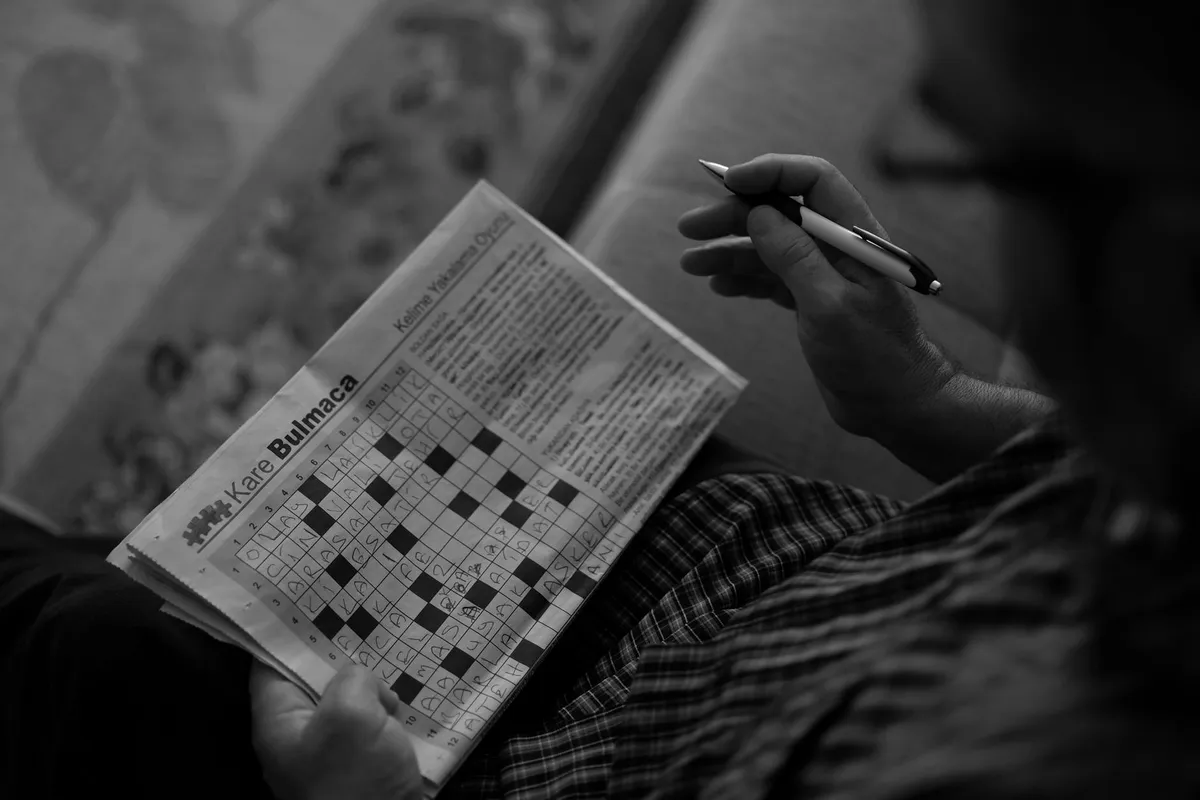
I went to my first American Crossword Puzzle Tournament (ACPT) earlier this year. I came in 247th out of approximately 700 attendees. This is somewhere around the median, which sounds disappointing for someone who solves the NYT crossword every day, but is actually about what should be expected for a first-time attendee.
Here's the honest recap of what the experience was actually like, what I learned, and what I wish someone had told me before I went.
What ACPT actually is
The American Crossword Puzzle Tournament is the major annual crossword competition. It's held in Stamford, Connecticut over a weekend in March or April. About 700 people attend. The competition involves solving 7 puzzles across the weekend, with timed scoring.
The puzzles are constructed specifically for the tournament. Different difficulty levels are available, but the main competition uses one set of puzzles.
Will Shortz directs the tournament. Many prominent constructors and puzzle personalities attend. The atmosphere is part competition, part convention.
The actual schedule
The weekend went something like this:
Friday evening: Registration and opening reception. Solving sample puzzles. Meeting people.
Saturday morning: Puzzles 1-3 (easy to moderate).
Saturday afternoon: Puzzles 4-5 (moderate to hard).
Saturday evening: Cocktail party, talent show. Substantial socializing.
Sunday morning: Puzzles 6-7 (hard, with #6 being the legendary brutal puzzle).
Sunday afternoon: Final round (top 3 in each division solving on stage on giant whiteboards).
Awards ceremony.
The schedule is substantial. By Sunday afternoon I was exhausted in ways the puzzles alone wouldn't have produced.
How the puzzles compare to home solving
The tournament puzzles are different from typical NYT puzzles in specific ways:
Format. The puzzles use specific construction conventions. Once you've seen a few tournament puzzles, you recognize the patterns.
Difficulty curve. The puzzles ramp up across the weekend. Saturday afternoon is hard but doable. Sunday morning #6 is brutal in ways even experienced solvers struggle with.
Specific cluing patterns. Tournament cluing has specific style elements. Trickier in ways that home solving doesn't prepare you for.
Pressure environment. Solving timed in a room with hundreds of others is different from home solving. The pressure produces specific errors.
I solved the early puzzles fine. The hard puzzles I struggled with in ways I wouldn't have at home.
The pressure problem
The single biggest issue I had was pressure-related errors:
I made errors in cluing-direct entries that I'd have gotten right at home — just rushing.
I corrected errors when I shouldn't have, second-guessing correct answers under time pressure.
I missed obvious clue interpretations because I was rushing through clues.
I left squares blank rather than guessing on partial information, which costs more points than guessing.
The pressure mistakes cost me probably 50 ranks. With cleaner solving I'd have been around 195th. Still not winning, but better.
For first-time tournament solvers, pressure handling is the single biggest gap between home solving ability and tournament performance.
What I wish I'd known
Specific things I learned that I wish someone had told me before:
Practice on previous tournament puzzles. Old ACPT puzzles are available. Solving 5-10 of them under timed conditions builds familiarity with the format.
The pressure is real. Even confident home solvers find the tournament environment substantially different. Plan for the difference.
Sleep matters. The Saturday night socializing is fun. Going to bed late produces Sunday morning errors. The trade-off is real.
Bring multiple pencils. Pencil failure during a timed puzzle is brutal. Bring backups.
Bring a watch. The room has a clock but specific time awareness during your puzzle helps.
Don't guess wildly. Wrong squares cost more points than blank squares. Blank squares cost 1 point each; wrong squares cost more.
Read clues fully. The pressure encourages first-impression solving. Resist.
None of these are secret. They're just not obvious until you've been there.
The community
The ACPT community was the unexpected highlight:
I met dozens of people I'd only known from puzzle Twitter or constructor blogs.
I attended meals with people whose puzzles I've solved for years.
I had substantive conversations about specific puzzles, construction techniques, and the broader puzzle scene.
The community is welcoming to newcomers. People remember being new themselves.
The community is also extensive. Hundreds of people who care substantially about crosswords. The size means substantial diversity within the community.
For people seriously into puzzles, the community alone justifies attending.
The talent show
Saturday evening features a talent show. This is more substantial than the name suggests.
Performers include constructors and editors performing musical and comedic acts that often relate to crosswords.
Will Shortz traditionally participates.
The show is unexpectedly good. Not because everyone is professionally talented but because the audience-performer relationship is unusually warm.
It's also the social anchor of the weekend. The talent show is when the social aspect peaks.
For introverts who find conferences exhausting, the talent show may be the most-tolerable structured social event.
The cost
Attending ACPT involves substantial costs:
Registration: about $250.
Hotel (Stamford weekend): $500-800 depending on choices.
Meals: $200-300 across the weekend.
Travel: highly variable depending on origin.
Total: typically $1,000-1,500 for someone traveling from outside the immediate area.
The cost is meaningful. For people seriously into crosswords, it justifies itself. For casual interests, it might not.
Who should attend
Recommendations by scenario:
Daily NYT solvers who want deeper puzzle engagement: Yes. The community alone is worth it.
Casual solvers curious about the scene: Maybe. The cost is meaningful for casual interest.
Aspiring constructors: Yes. The constructor community is concentrated at ACPT.
People intimidated by competition: Yes anyway. The competition is one part of a larger weekend; you can engage with it as much or as little as you want.
People who hate crowds: Maybe not. 700 puzzle people in one hotel is substantial.
The right answer depends on your specific interest in puzzles and tolerance for conferences.
What I'd do differently
For my second ACPT (which I plan to attend):
Practice more on previous ACPT puzzles before attending.
Get more sleep Saturday night even at the cost of some socializing.
Practice timed solving in noisy environments before attending.
Plan specific people to meet rather than relying entirely on serendipity.
Schedule downtime during the weekend rather than trying to maximize every event.
Bring a notebook for noting things to remember rather than relying on memory.
Each adjustment should produce somewhat better experience.
The competitive realism
An honest acknowledgment about ranking expectations:
The top 25 solvers at ACPT solve at speeds that fundamentally exceed what typical solvers can match. They're not just faster; they're solving in different cognitive mode.
For typical NYT daily solvers, target ranking is 100-300 out of 700. That's the realistic range.
Expecting top-50 finishes from typical solving is unrealistic. The top 50 solve crossword tournaments at competitive level — different from solving for daily enjoyment.
Adjust expectations accordingly. Coming in 247th sounds disappointing but is actually fine for first attendance.
The specific puzzles in retrospect
Looking at the seven tournament puzzles:
Puzzles 1-2: Easier than my Saturday NYT. Should have solved cleanly. Pressure produced errors I wouldn't have made at home.
Puzzle 3: Tricky theme. I missed the theme connection initially and lost time figuring it out.
Puzzle 4: Substantial themelessless. I solved it but in time my home solving wouldn't have required.
Puzzle 5: Themed with substantial difficulty. I missed the theme entirely and brute-forced the fill, which is slow.
Puzzle 6: The legendary brutal one. I got close but didn't finish in time.
Puzzle 7: Sunday-style themed. Adequate for me. Done cleanly.
The Friday-style and Saturday-style tournament puzzles were where I fell behind. My weekday solving is fine; my hard solving needs work.
What the tournament taught me about my solving
Specific weaknesses I identified:
Theme detection. I miss themes more than I should. Missing the theme costs substantial time.
Pressure management. My solving is worse under pressure than my home solving suggests.
Hard cluing. Specific tournament cluing patterns trip me up consistently.
Endurance. By puzzle 6 my mental energy was depleted in ways that affected performance.
Each weakness is addressable through specific practice. My second ACPT should reflect improvement on each.
The honest summary
ACPT was substantial. The cost is real. The community is excellent. The competition is harder than home solving suggests. The weekend is exhausting.
For people seriously into crosswords, attending at least once is recommended. The community alone is worth the cost. The competition is part of a larger experience that includes substantial social and educational elements.
For my own situation — daily solver with substantial engagement — coming in 247th out of 700 was about what I should have expected. Not impressive but not embarrassing. Around the median.
I'll attend again. The first time was about learning what the experience is. The second time will be about doing it better.
For people considering attending: it's a real thing worth doing if your puzzle engagement is substantial. The cost is real. The reward is real. The trade-off is yours to evaluate.
Stamford in March. 700 puzzle people. Seven puzzles. One weekend. Some new friends. Specific lessons. That's ACPT.
See you next year.