
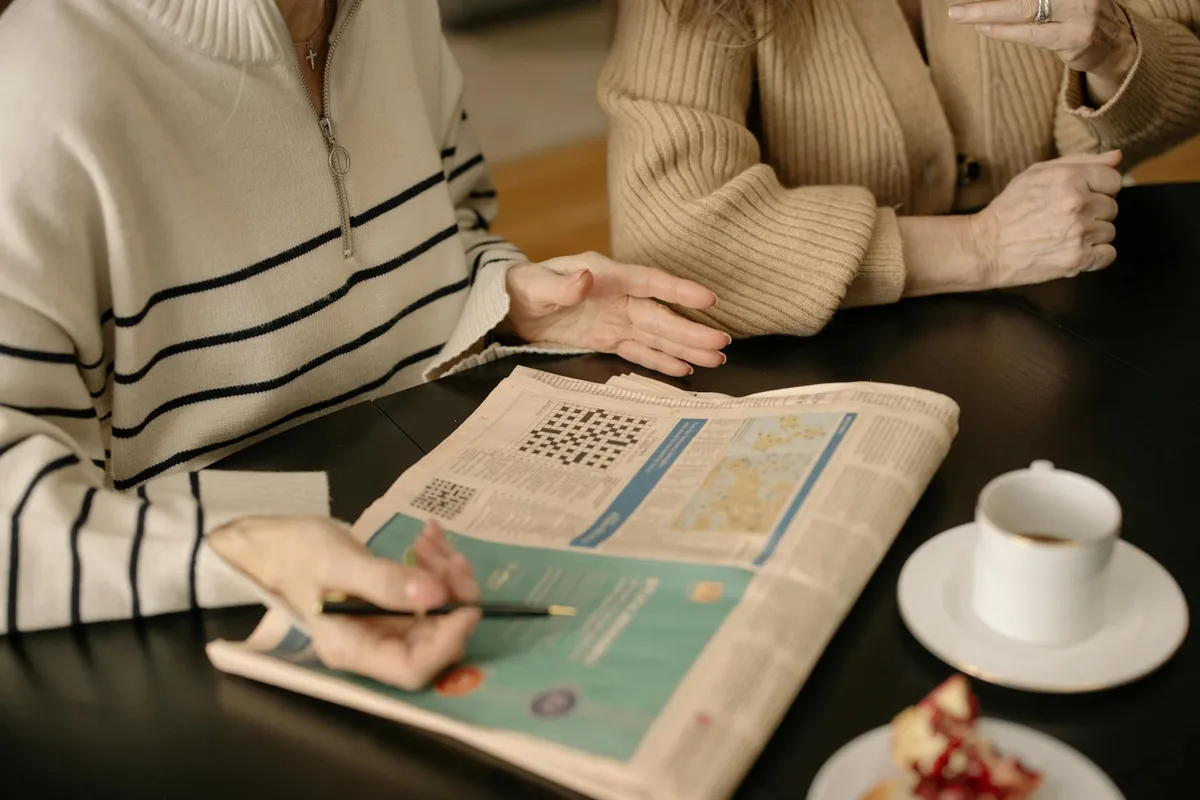
I love crosswords. I solve them daily. I attend tournaments. I have friends I share specific puzzles with. But love doesn't mean uncritical acceptance, and there are specific crossword conventions I've come to actively dislike across years of solving.
These aren't broad complaints about cluing difficulty or theme quality. They're specific conventions that I think the field would be better without. Here are the five I actually hate, with reasons.
1. The "Roman numeral year" clue
Clues like "1066: II + LXIV" or "Year of [historical event] in Roman numerals" producing answers like MLXVI.
Why I hate it: It's not a word. It's not even really a phrase. It's a number rendered as letters because it fits in the grid. The "solving" required is just translation between numbering systems.
What it represents: Constructor desperation when the grid demands a specific letter pattern that English vocabulary can't fill. Roman numerals are the pattern-fix when nothing else works.
What I want instead: Grid redesign. If your fill requires Roman numerals, the grid needs work. Real words exist.
Acceptable exception: Genuinely common Roman numeral usage (MMXX for 2020, etc.) when the cluing is direct.
2. The obscure "as in poetry" clue
Clues like "Sunset, in verse" producing answers like EVENTIDE or EREN.
Why I hate it: The "in verse" or "in poetry" qualifier is a constructor escape valve for archaic words that nobody uses. The clue isn't solvable without recognizing the qualifier means "I'm using a word from 1730 that you might not know."
What it represents: Reliance on archaic vocabulary that has no other place in modern crosswords. The poetry qualifier shouldn't justify what the word itself can't.
What I want instead: If a word has no current use, it doesn't need to be in puzzles. The "in poetry" excuse exempts archaic vocabulary from the modern-relevance test.
Acceptable exception: Genuine literary references where the poetic context is part of the answer's identity.
3. The "cousin to" clue
Clues like "Cousin of an emu" producing RHEA or "Cousin of a llama" producing ALPACA.
Why I hate it: "Cousin of" is constructor shorthand for "I want this word but can't define it directly." The relationship being claimed is usually genealogically inaccurate. Emus and rheas aren't actually closely related taxonomically.
What it represents: Lazy cluing. The animal named in the clue isn't closely related to the answer; they're just both ratites or both camelids or whatever broader category exists.
What I want instead: Direct cluing. "South American running bird" for RHEA. "Andean wool source" for ALPACA. The actual identity of the answer rather than vague gestures toward related concepts.
Acceptable exception: When the relationship is genuinely close and adds meaningful information.
4. The "what we're calling it now" theme
Theme puzzles that are mostly variations on "X is called Y instead now," cluing trendy renaming with multiple theme entries.
Why I hate it: The theme isn't really creative. It's recognition that things have been renamed. The theme entries are essentially a list of recent renames.
What it represents: Easy theme constructing. Identify a category of recent renamings, fill the grid with examples. Done.
What I want instead: Themes with actual wordplay. Themes that reveal something. Themes where the connection between entries is more sophisticated than "these are all examples."
Acceptable exception: When the recent renamings are themselves the wordplay (puns on the new names, structural patterns in the new names, etc.).
5. The "obvious wordplay clue marker" — extras
Cluing that uses (?) or specific punctuation to telegraph "this is wordplay" before requiring the wordplay solving.
Why I hate it: The wordplay is supposed to be the puzzle. Telegraphing it removes substantial difficulty. The (?) marker is editorial training wheels.
What it represents: Editorial assistance to less-experienced solvers. The marker reduces difficulty but at the cost of the puzzle's integrity as wordplay.
What I want instead: Cluing that requires the solver to recognize wordplay through context rather than typographic markers. Yes, this is harder for newer solvers. The level of difficulty appropriately matches the puzzle's intended difficulty.
Acceptable exception: When the (?) is signaling difficulty level rather than wordplay specifically. Different convention, different acceptability.
The bonus complaint: brand names
Specific brand names appearing as answers because they fit the letters: MAYTAG, CRISCO, OREO, etc.
Why I dislike it: Brand names are commercial. They're not part of language in the same way common nouns are. Filling crosswords with brand names commercializes the puzzle.
What it represents: The constraint of grid filling. Three-letter words are limited, and OREO/AREA/EVER/AERO appear repeatedly because they fit common patterns. Same dynamic with longer brand names.
What I want instead: Constructive grid design that doesn't require brand names. When brand names appear, they should be unmistakable elements of the language rather than fill-of-convenience.
The honest issue: This complaint is harder to fully sustain. OREO has become genuinely part of language. The line between commercial brand and genuine common noun shifts over time.
What these have in common
The specific complaints share a pattern:
Each represents constructor or editorial accommodation to grid constraints rather than language reality.
Each pulls the puzzle toward content that isn't really part of common vocabulary.
Each is more visible to experienced solvers than to newer ones (newer solvers often don't notice the specific patterns).
Each is somewhat resolvable through better construction without significantly raising difficulty.
The complaints aren't about difficulty; they're about authenticity of the cluing relative to language.
What I'm not complaining about
Things that are sometimes complained about that I don't mind:
Difficult cluing. Hard puzzles should be hard.
Obscure references when the references are genuinely interesting.
Themes I don't personally find clever (clever is subjective).
Specific constructors' styles I don't prefer (preference is preference).
Bygone vocabulary when the bygone words are interesting.
The line between "good puzzle I happened not to enjoy" and "puzzle with structural problems" matters.
What I think editorial choices should be
If I were editing crosswords, principles I'd apply:
Words that aren't really part of language don't belong in puzzles regardless of grid convenience.
Cluing should be honest about what the word means rather than gesturing vaguely at relationships.
Themes should reveal something rather than just listing examples.
Wordplay should be the puzzle rather than be telegraphed.
Grid construction should support good fill rather than require accommodations.
The principles aren't novel. They're what good editing typically aims for. Where it falls short, the listed conventions emerge.
What I appreciate when constructors don't do these
The flip side: I notice when constructors avoid these conventions:
Grids without Roman numeral fixes feel cleaner.
Cluing without "in poetry" exemptions has more language integrity.
Direct cluing without "cousin to" gestures rewards more.
Themes with substantive wordplay rather than category lists are more satisfying.
Wordplay puzzles without telegraphing markers require and reward more.
Specific constructors consistently avoid these conventions. Their puzzles are noticeably better as a result.
Why none of this matters that much
For honesty: my complaints are minor in the larger context.
Crosswords overall are excellent. The conventions I dislike are present in maybe 15% of puzzles and noticeable in only specific moments.
Many constructors and editors avoid these conventions consistently.
The puzzle scene continues to evolve in ways that often address these complaints.
For all the complaints I have, daily NYT crossword remains a high-quality cultural product I'm glad exists.
The complaints are something to enjoy thinking about, not something to actually be angry about.
The hot take in summary
Five conventions I think crosswords would be better without:
Roman numeral year clues that are just notation translation.
"In poetry" qualifiers excusing archaic vocabulary.
"Cousin of" clues using vague relationships.
"What we're calling it now" themes that just list renames.
Wordplay markers that telegraph wordplay before solving.
Plus the bonus: excessive brand names in grids.
None of these are deal-breakers. All of them are specific things I'd remove if I had editorial control. Crosswords would be slightly cleaner without them. The slight cleanliness improvement matters cumulatively.
For solvers who haven't noticed these patterns: now you can't un-notice them. Sorry.
For solvers who agree: we exist. We have opinions. We notice the same things.
For constructors: please avoid these where you can. Many of you already do. The avoidance is appreciated even when it's not explicitly noted.
That's the hot take. I love crosswords. I have specific complaints. Both can be true.